Deciding whether to repair or replace an aging HVAC system is one of those decisions that keeps popping back up until you finally deal with it. In New Orleans, where systems run nearly year-round fighting humidity and heat, that worn-out compressor or inefficient condenser isn’t getting better on its own. This guide cuts through the noise: you’ll get reliable replacement signals, a straightforward repair-versus-replace decision framework, current costs for the New Orleans market, and what’s changed with refrigerants now that R-410A is being phased out. We’ll also walk through what a proper replacement looks like here—load calculations, coastal protection, and humidity control that actually works in this climate.
Hagerman Services is a local, family-owned HVAC contractor serving Greater New Orleans since 2012. We size systems correctly, install them to handle salt air and humidity, and don’t waste your time with high-pressure sales tactics. After you read through the signals and costs below, call us at (504) 314-1486 for a free on-site inspection with an actual load calculation—it’s the only way to know what your home needs and what replacement will realistically cost.
Understanding HVAC Replacement Timing and Signals
Seven Signs Your HVAC System Needs Replacement
End-of-life for an HVAC system shows up as a pattern, not a single dramatic failure. You’ll typically see a combination: the unit’s past its expected lifespan for this climate, energy bills creep up every summer, repairs are happening more often, rooms stay uncomfortable no matter how you adjust the thermostat, and humidity control gets worse. Spotting these trends early means you replace on your schedule instead of during a heat emergency when you have no leverage and limited options.
Watch for these seven replacement signals:
→ Age beyond expected lifespan – The system is at or past typical service life for equipment in coastal Louisiana
→ Rising energy bills – Steady, noticeable increases in cooling costs summer over summer
→ Frequent breakdowns – Repairs happening every season or multiple times per year
→ Uneven temperatures – Hot and cold spots that don’t improve even after service
→ Short-cycling – System starts and stops rapidly, which kills efficiency and stresses components
→ Strange noises or odors – Grinding, banging, or musty smells that signal mechanical or microbial problems
→ Poor humidity control – Indoor humidity stays high even when the AC is running
These issues rarely show up alone. A ten-year-old condenser that’s short-cycling will also push energy bills up and probably struggle with humidity removal. When you see multiple symptoms, the next step is comparing what another repair costs against what replacement costs—and factoring in how much useful life the system has left.
Why Coastal Louisiana Systems Fail Faster Than Inland Equipment
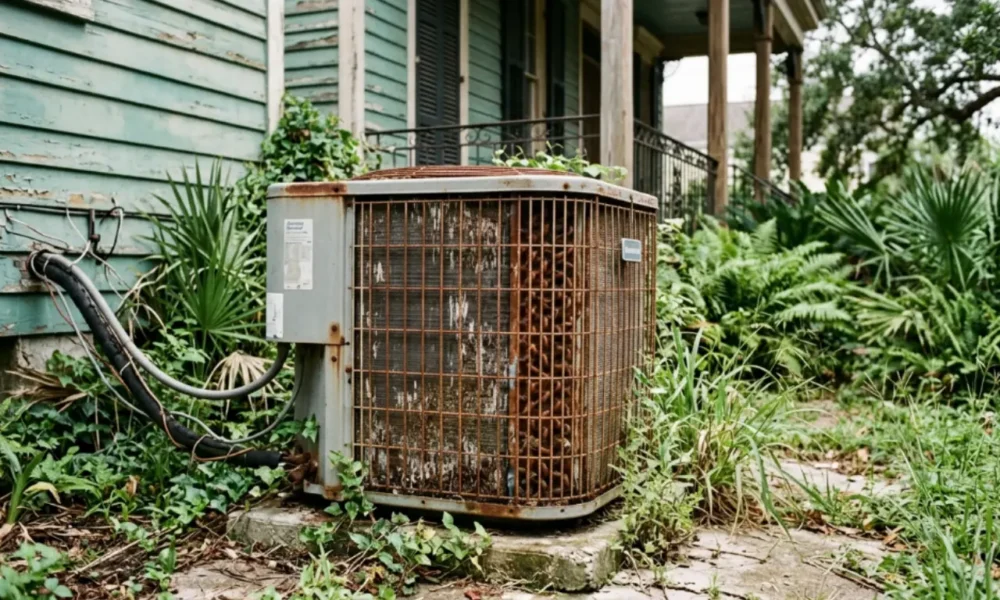
Typical lifespans give you a baseline, but coastal conditions shorten equipment life. In moderate climates, air conditioners and heat pumps often last 12–15 years while furnaces reach 15–20 years. In New Orleans, salt air, extended runtime, and high humidity usually knock several years off those numbers. A system that would last 12 years in Atlanta might need replacement around year 8–10 here. Once age-related efficiency loss combines with rising repair frequency, replacement usually becomes the smarter money move: you get full capacity back, better humidity control, and lower energy bills from modern equipment designed for extended cooling seasons.
Common HVAC Failure Symptoms and What They Actually Mean
Symptoms tell you where the system is failing and whether the problem is fixable at reasonable cost. Mechanical issues—noisy bearings, humming compressors, hissing refrigerant—typically mean a part has failed. Electrical problems like repeated breaker trips or thermostat faults can cascade into bigger failures. Airflow issues—weak output from vents, blocked returns, leaky ductwork—cut system capacity and often cost more to correct than the original repair estimate suggested. Identifying the root cause (compressor, condenser coil, evaporator coil, ductwork, or controls) helps a technician give you a real recommendation instead of just selling what’s easiest.
Making the Repair-Versus-Replace Decision
The Decision Framework
Use simple, repeatable rules: compare repair cost to replacement cost, factor in system age and remaining useful life, count how many repairs you’ve done recently, and account for local conditions like humidity performance and corrosion. Also check warranty status and whether the system uses obsolete refrigerant—those variables show whether a repair buys you meaningful time or just delays the inevitable. The decision framework below turns those factors into a clear action plan instead of an endless internal debate.
Repair-versus-replace decision factors:
- Repair cost relative to replacement – If one repair approaches half the cost of new equipment, replacement typically makes more sense
- Age and remaining lifespan – Systems with limited remaining life favor replacement over repeated fixes
- Repair frequency – More than two major repairs in 12–24 months signals it’s time to replace
- Efficiency and humidity performance – High bills or ongoing humidity issues reduce the value of another repair
The table below gives you a local-friendly framework for making the call.
| Decision Factor | Typical Value / Rule |
|---|---|
| Repair Cost Threshold | If repair ≥ 50% of replacement cost → favor replacement |
| System Age | <50% of expected lifespan: consider repair; >50%: replacement favored |
| Repair Frequency | More than 2 major repairs in 24 months → consider replacement |
| Efficiency Loss | Persistent >15% efficiency drop → replacement likely pays back faster |
| Humidity/Corrosion Risk | High humidity or coastal corrosion shortens useful life → tilts toward replacement |
The next section explains the “50 Percent Rule” with a straightforward example so you can apply it to estimates you’re comparing.
The 50 Percent Rule for HVAC Replacement Decisions
The 50 Percent Rule is simple: when a single repair costs close to half the price of replacing the system, replacement usually wins. For example, a compressor replacement estimated at $2,000 versus a full system replacement at $5,000 often leads homeowners to replace—they get a full warranty, years of trouble-free service, and better efficiency. Exceptions include small repairs on newer equipment or situations where cash flow requires a temporary fix. Always pair the rule with system age and visible condition: the same $2,000 repair on a 5-year-old unit has very different value than on a 13-year-old coastal unit with visible corrosion.
How New Orleans Energy Costs and Humidity Change the Replacement Math
New Orleans energy rates and year-round humidity change the calculation by increasing both operating costs and total runtime. More runtime means more compressor cycles, faster wear, and faster efficiency loss compared to drier climates. Over five years, a modern, properly sized system often recoups a meaningful portion of replacement cost through lower energy use and better dehumidification—which matters here where humidity drives comfort as much as temperature. Available rebates or financing can shorten payback timelines. Include projected energy savings and humidity performance when you calculate lifecycle cost, not just the upfront price difference between repair and replacement.
HVAC Replacement Costs in New Orleans
Typical Replacement Cost Ranges by System Type
Replacement pricing depends on equipment type, system size, ductwork condition, coastal protection needs, and installation complexity in older homes. The ranges below reflect typical local projects including basic equipment and labor plus common coastal durability upgrades. Use these figures to set expectations before you request a detailed quote, but remember that actual costs vary based on your home’s specific conditions and the equipment you select.
Typical HVAC replacement costs by system type:
| System Type | Typical Replacement Cost Range | Typical Lifespan (Coastal-adjusted) |
|---|---|---|
| Central AC (condenser + coil) | $4,500 – $8,500 | 8–12 years |
| Furnace (gas/electric) | $3,500 – $7,500 | 15–20 years |
| Heat Pump (all-electric) | $5,500 – $10,500 | 10–15 years |
Furnace Replacement Versus AC Replacement in the Gulf South
Furnace work involves heating components and their integration with ductwork and controls, while AC replacement centers on the condenser, evaporator coil, and refrigerant circuit. In the Gulf South, cooling is typically the bigger expense because AC runs most of the year and outdoor condensers face salt-air corrosion. When both heating and cooling components are aging, combined replacement usually saves money through matched components, a single labor mobilization, and better overall warranty coverage. Combined replacements also improve system performance compared to piecemeal fixes, especially in homes with older or leaky ductwork that should be addressed during major HVAC work.
Local Factors That Drive HVAC Replacement Pricing
New Orleans-specific factors shape equipment selection and labor costs. Coastal durability measures—corrosion-resistant coatings, elevated outdoor mounts, sealed electrical enclosures—add cost upfront but extend equipment life in salt-air environments. Older homes often require complex duct routing, structural work, or added insulation, which increases labor time and material costs. Permits, code compliance, and proper Manual J load calculations also affect pricing but improve long-term efficiency and humidity control, typically lowering lifecycle cost despite higher initial expense. Our installation process accounts for these factors so you get equipment that actually lasts here.
Benefits of Upgrading to Modern HVAC Equipment
Real Performance Gains You’ll Actually Notice
A properly sized, modern HVAC system delivers measurable gains in energy efficiency, humidity control, indoor air quality, and overall comfort—all critical in the Gulf South where systems run nearly continuously. New equipment with higher SEER2 ratings, variable-speed compressors, and better controls uses less electricity while running longer, gentler cycles that remove more moisture from the air. Improved coils, better filtration, and matched-system design also reduce allergens and lower the risk of microbial growth in humid homes. Below are the main benefits and how they translate into outcomes you’ll actually notice.
Major benefits of upgrading to energy-efficient HVAC equipment:
→ Lower utility bills – Higher SEER2/AFUE ratings and variable-speed operation cut annual energy use
→ Better humidity control – Longer, steadier run times and optional whole-home dehumidifiers reduce mold risk and improve comfort
→ Improved indoor air quality – Modern filters and better airflow remove more particulates and allergens
→ Greater reliability and warranty protection – New equipment lowers emergency repair risk and comes with stronger manufacturer support
How Modern Systems Cut Energy Use and Lower Your Bills
New systems achieve better efficiency through higher SEER2 and AFUE ratings, properly matched components, and variable-speed technology that scales output to actual load instead of constant on/off cycling. Depending on your old system’s condition and how well it was installed originally, a modern replacement can cut cooling energy use by roughly 15–35%. Variable-speed compressors and ECM blower motors reduce start/stop losses and improve dehumidification by running longer at lower speeds, which pulls more moisture from the air without overcooling. Over 5–10 years, these gains can offset a meaningful portion of replacement cost—especially when local incentives or financing reduce upfront expense. Our team can show you projected savings based on your current system and typical usage patterns.
Why Humidity Control Matters So Much for New Orleans Homes
High indoor humidity is a core comfort and health issue here. Excess moisture promotes mold, damages building materials, and makes rooms feel warmer even at lower thermostat settings—which pushes people to overcool and waste energy. Correctly sized systems with variable-speed compressors and dedicated dehumidification keep indoor humidity in a safer range and prevent the short-cycling that kills moisture removal. Local installers who understand New Orleans homes size systems for both temperature and humidity control, avoiding common mistakes like oversizing that reduce dehumidification performance. We covered this in detail in our energy efficiency guide for local homeowners.
Hagerman Services emphasizes Manual J load calculations and coastal durability when selecting equipment to balance energy efficiency with humidity control. Our experience with New Orleans house types and salt-air exposure helps ensure systems are sized and protected properly so you get reliable comfort and longer equipment life.
Understanding the Refrigerant Transition
How the R-410A Phase-Out Affects Your Aging System
The phase-out of R-410A refrigerant affects anyone with an older system still using it. As of January 1, 2025, manufacturers can no longer produce new equipment using R-410A because its Global Warming Potential (GWP) exceeds new EPA limits. New systems now use R-454B or R-32 refrigerants, both classified as A2L (mildly flammable) and engineered with safety features for proper handling. You can still service and repair existing R-410A systems, but as supply becomes limited and prices rise, repairs requiring refrigerant may become progressively more expensive. Replacing an R-410A system with equipment using modern refrigerant avoids future supply issues and usually improves efficiency.
The refrigerant transition affects aging systems in several ways. R-410A was the industry standard for residential cooling for nearly two decades, but environmental regulations drove the shift to lower-GWP alternatives. Production of R-410A equipment stopped at the start of 2025, though existing inventory can still be installed through the end of 2025. After that, only systems using R-454B, R-32, or other low-GWP refrigerants will be available for new installations. Existing R-410A systems will continue to operate and can be serviced indefinitely, but refrigerant for repairs will increasingly come from reclaimed supplies as new production has ended.
The table below compares R-410A with modern replacement refrigerants on key characteristics.
| Refrigerant | Key Characteristics | Impact / Cost Considerations |
|---|---|---|
| R-410A | GWP: 2,088; widely used 2000–2024 | Supply limited to reclaimed refrigerant; service costs rising over time |
| R-454B | GWP: 466; primary replacement for ducted systems | Better efficiency, stable supply, requires A2L-rated equipment and safety features |
| R-32 | GWP: 675; common in ductless and some ducted systems | High efficiency, lower GWP than R-410A, also requires A2L-rated equipment |
Understanding these differences helps you make informed decisions about repair versus replacement when your system needs refrigerant service.
Practical and Financial Implications of the R-410A Phase-Out
Because R-410A production has ended, supplies are now limited to reclaimed refrigerant from decommissioned systems. As that supply shrinks and demand from millions of existing systems continues, prices will rise—making recharges and leak repairs more costly over time. That economic reality narrows the case for expensive repairs on aging R-410A systems and strengthens the argument for replacement with modern refrigerant technology. From a homeowner’s perspective, installing new equipment built for R-454B or R-32 eliminates ongoing refrigerant procurement risk and typically improves efficiency, lowering total cost of ownership. When you factor in rising R-410A service costs against falling prices for new equipment as production scales up, the break-even point for replacement moves closer.
Why Newer Refrigerants Like R-454B and R-32 Are Better
R-454B and R-32 offer better environmental performance and regulatory stability compared to R-410A. Systems designed for these refrigerants achieve higher SEER2 ratings, improved heat-exchange efficiency, and often more compact designs that reduce operating costs. Parts availability, manufacturer support, and warranty coverage remain current for these refrigerants, reducing long-term service risk. The A2L safety classification (mildly flammable) requires additional safety features like leak detection systems and specific installation practices, but extensive testing shows these refrigerants are extremely difficult to ignite under normal conditions and self-extinguish quickly if ignited. Upgrading to equipment built for modern refrigerants improves efficiency while aligning your home with current regulations—and avoiding future obsolescence as R-410A supply continues to decline.
The Environmental Protection Agency provides detailed technical information on the refrigerant transition and equipment requirements at https://www.epa.gov/, which homeowners and contractors can reference for current regulatory guidance.
Working with Hagerman Services for HVAC Replacement
What the Replacement Process Actually Looks Like
Our replacement process follows a clear sequence designed to get you the right equipment installed correctly: initial inspection with load calculation, equipment selection with coastal durability considerations, installation with proper commissioning, and post-install follow-up including warranty registration and maintenance planning. You’ll receive transparent estimates that separate equipment costs, labor, ductwork needs, and permit fees so you can compare options clearly. Proper installs include Manual J and Manual S load calculations, matched equipment for humidity control, and corrosion-resistant practices appropriate for coastal environments. Below is what homeowners typically experience during a full replacement with Hagerman Services.
HVAC replacement process steps:
- Initial on-site inspection and Manual J load calculation – We assess your home envelope, existing ductwork, insulation, and current system performance to determine correct sizing
- Equipment selection and written estimate – You receive options with efficiency ratings, refrigerant type, coastal durability features, and warranty details for comparison
- Professional installation and commissioning – Technicians install matched components, set proper refrigerant charge and airflow, verify thermostat operation, and test all modes
- Post-installation follow-up – Warranty registration, system orientation showing you how to operate and maintain the equipment, and recommended maintenance schedule
How Hagerman Services Ensures Coastal Durability and Proper System Sizing
We specify corrosion-resistant components, elevate outdoor units where appropriate, and use sealed electrical enclosures to limit salt-air damage that shortens equipment life near the coast. Proper sizing with Manual J and Manual S calculations prevents oversizing that causes short-cycling and poor dehumidification—a common mistake with significant comfort consequences in humid climates. Matched-system selection ensures the compressor, condenser, evaporator coil, and controls work together for best efficiency and reliability. Where conditions warrant it, we add protective coatings or design installation details to reduce long-term corrosion risk. These practices extend the effective service life of new systems in New Orleans’ coastal environment and reduce the frequency of premature failures we see with improperly specified or carelessly installed equipment.
How to Request a Free Quote or Schedule HVAC Replacement
To request a free quote or schedule a replacement consultation with Hagerman Services, have your home address, current system age and model (if known), a description of symptoms or issues, and any recent repair invoices ready when you call (504) 314-1486. We’ll arrange an on-site inspection, explain the Manual J load calculation process, and review equipment options including coastal protection and humidity control features appropriate for your home. At the visit you’ll receive a clear, itemized estimate showing equipment costs, labor, and any recommended ductwork improvements or permit requirements so you can compare repair versus replacement with actual numbers. After you decide, we’ll confirm the installation timeline, coordinate any necessary permits, complete the work professionally, register warranties, and set up a maintenance plan to protect your investment.
Contact Hagerman Services:
205 Westchester Pl, New Orleans, LA 70131
Phone: (504) 314-1486
What to have ready for an accurate quote:
Current system age and model number, description of problems or symptoms, recent repair invoices, and any concerns about comfort or energy costs.
Frequently Asked Questions
What are the advantages of upgrading to a smart HVAC system?
Smart HVAC systems give you better energy control, remote access, and convenience that older thermostats can’t match. Smart thermostats learn your schedule and adjust temperatures automatically to save energy while maintaining comfort. Many systems send maintenance alerts and usage data so you can spot small issues before they become expensive repairs. Smart integration also lets you control climate alongside other home automation features, which is useful if you travel frequently or manage multiple properties. For homeowners who want more control over energy costs and system performance, smart upgrades deliver measurable value.
How can I determine the right size HVAC system for my home?
A Manual J load calculation is the correct way to size HVAC equipment—it’s not guesswork based on square footage alone. Manual J factors in your home’s insulation levels, window area and orientation, construction type, occupancy, and local climate to determine actual heating and cooling loads. An oversized system short-cycles and delivers poor humidity control; an undersized system can’t keep up during extreme weather. A qualified technician performs Manual J during the estimate visit and recommends equipment capacity matched to your home’s actual needs for proper comfort and efficiency.
What should I expect during the HVAC installation process?
Expect an organized, professional sequence: on-site inspection with load calculation, written estimate showing equipment options and costs, removal of old equipment, installation of new matched components, and careful commissioning to verify performance. Technicians will set proper refrigerant charge, balance airflow across all zones, verify thermostat operation and programming, and test heating and cooling modes. After installation we register manufacturer warranties, review system operation and maintenance requirements, and provide recommended service schedules so you know how to keep the equipment running efficiently. Professional installation makes the difference between equipment that lasts 8 years and equipment that delivers 12+ years of reliable service.
Are there any local incentives for upgrading my HVAC system?
Yes—utility rebates, regional efficiency programs, and occasional federal tax credits can lower upfront cost for energy-efficient HVAC upgrades. Available incentives change periodically, so check with your local utility provider or ask us when you request a quote. We include applicable rebates and financing options in your estimate when available. Many high-efficiency systems qualify for incentives that reduce net cost by several hundred dollars or more, improving the payback timeline for replacement versus continued repairs on aging equipment.
What are the signs that my HVAC system needs maintenance?
Watch for unusual noises like grinding or squealing, inconsistent room temperatures, rising energy bills without usage changes, reduced airflow from vents, or frequent cycling on and off. If the system blows warm air during cooling mode or filters clog unusually quickly, schedule service promptly. Regular maintenance—filter changes every 1–3 months and annual professional tune-ups—prevents small issues from becoming major repairs. Catching problems early through maintenance typically costs far less than emergency repairs during the peak of summer when systems fail under maximum load.
How does humidity affect HVAC performance in New Orleans?
Humidity has major impact on both comfort and system performance here. High indoor humidity makes rooms feel warmer even at lower thermostat settings, forces the HVAC system to run longer to remove moisture, and increases energy use and component wear. Properly sized systems with variable-speed components and appropriate dehumidification capacity are essential to comfort and preventing mold and moisture damage in coastal homes. Oversized systems—a common sizing mistake—short-cycle and fail to run long enough to remove humidity effectively, leaving homes that feel clammy even when the AC is running. Correct sizing and equipment selection for Gulf South humidity is one of the most important aspects of HVAC replacement in this climate.
What should I do if my HVAC system is still using R-410A refrigerant?
If your system uses R-410A and is approaching end-of-life or needs expensive refrigerant-related repairs, consider replacing it with equipment that runs on R-454B or R-32. R-410A supply is now limited to reclaimed refrigerant since production ended in 2025, which will drive service costs up over time. Replacing the system avoids future supply constraints, usually improves efficiency with modern equipment, and reduces long-term service costs. If your R-410A system is relatively new and running well, continue normal maintenance—it will remain serviceable for its normal lifespan, but factor refrigerant availability and cost into any major repair decisions.
What should I consider when choosing a new HVAC system for my home?
Think about your home’s size and layout, local climate demands, and your priorities around efficiency versus upfront cost. Correct capacity based on Manual J load calculation is crucial—wrong sizing causes comfort problems and premature equipment failure. Look for higher SEER2 ratings for cooling efficiency and AFUE ratings for heating efficiency if your system includes a furnace. Variable-speed components improve comfort and humidity control. Consider refrigerant type (R-454B or R-32 for new systems), coastal durability features if you’re near water, and warranty coverage. A local technician who performs proper load calculations and understands New Orleans conditions will recommend equipment matched to your actual needs and budget.
How can I improve the lifespan of my HVAC system?
Regular maintenance is the single most effective way to extend equipment life. Schedule annual professional tune-ups, change filters every 1–3 months depending on usage and indoor air quality, keep the outdoor unit clear of debris and vegetation, and address duct leaks or insulation problems that force the system to work harder. Fix small issues promptly before they cascade into bigger failures—a $200 capacitor replacement today prevents a $2,000 compressor failure six months from now. Proper maintenance helps systems run efficiently longer and reduces total lifecycle cost even though you’re spending money on regular service. Our maintenance programs are designed specifically for Gulf South operating conditions and equipment longevity.
What financing options are available for HVAC replacement?
Many HVAC contractors including Hagerman Services offer financing plans ranging from low-interest loans to promotional deferred-interest offers that spread replacement cost over time. Utility rebates and local efficiency incentive programs can also reduce net upfront costs for qualifying high-efficiency equipment. Ask about financing options and available incentives when you request a quote so you can choose what fits your budget and cash flow situation. Financing makes sense when replacement delivers energy savings that offset monthly payments, turning a large upfront expense into a manageable monthly cost with immediate comfort benefits.
How do I know if my HVAC system is energy-efficient?
Check the SEER rating for air conditioners and heat pumps or AFUE rating for furnaces—higher numbers indicate better efficiency and lower operating costs. SEER2 ratings of 16+ and AFUE ratings of 95%+ represent high-efficiency equipment. Sudden increases in energy bills without usage changes or frequent repairs despite maintenance are signs your system is losing efficiency as components wear. A professional inspection will quantify current performance and show potential savings from upgrading to modern equipment. Comparing current energy costs to projected costs with new equipment helps you understand actual payback timeline for replacement.
What are the environmental benefits of upgrading to a new HVAC system?
New systems use refrigerants with much lower Global Warming Potential (GWP) than older R-410A or R-22 refrigerants and run more efficiently, which reduces both direct and indirect greenhouse gas emissions. Improved filtration and humidity control also boost indoor air quality, reducing allergens and preventing mold growth. Upgrading lowers your home’s environmental footprint while often cutting utility costs significantly—environmental benefits and economic benefits typically align with modern high-efficiency HVAC equipment.
What maintenance tasks should I perform on my HVAC system myself?
Change air filters every 1–3 months depending on system usage and household conditions, keep the outdoor unit free of leaves and debris, check for obvious leaks or unusual sounds, and ensure adequate clearance around both indoor and outdoor units. Monitor system performance for changes that might indicate developing problems. These simple tasks reduce repair frequency and keep performance steady between professional service visits. However, all refrigerant-related service, electrical work, and internal component inspection should be left to licensed professionals—DIY repairs on modern HVAC equipment void warranties and can create safety hazards.
Conclusion: Making the Right HVAC Replacement Decision
Recognizing when your HVAC system needs replacement instead of another repair saves money over the long term, improves comfort immediately, and prevents emergency failures during peak demand. By factoring in New Orleans’ humidity, coastal corrosion, and extended cooling season when evaluating options, you’ll choose equipment and installation practices that deliver longer service life and better performance. The decision framework, cost ranges, and refrigerant information in this guide give you the foundation to make informed choices and ask the right questions when comparing contractors and equipment options.
Contact Hagerman Services at (504) 314-1486 for personalized guidance and a complimentary on-site consultation including Manual J load calculation. We’ll help you determine whether repair or replacement makes more sense for your specific situation and provide transparent pricing for options that fit your home and budget. Take the first step toward more reliable comfort and lower energy costs today by getting an honest assessment from a local contractor who understands what actually works in this climate.