
Ductless mini splits offer year-round comfort and energy savings for New Orleans homes, especially historic properties without existing ductwork. Learn installation costs, benefits, and maintenance for Gulf South climate.
When your beautiful New Orleans home was built in 1925, nobody was thinking about central air conditioning. That gorgeous shotgun house in the Marigny or that charming Creole cottage in the Bywater came with high ceilings, cross-ventilation, and maybe a sleeping porch – but definitely no ductwork for modern HVAC systems.
Fast-forward to today, and you’re dealing with 90-degree temperatures, 80% humidity, and the reality that those historic design features aren’t quite enough to keep you comfortable during our extended cooling season that runs from March through November. Traditional central air installation would mean tearing through those beautiful plaster walls and original hardwood floors just to run ductwork. That’s where ductless mini splits come in as the perfect solution.
Ductless mini splits provide efficient, zone-controlled cooling and heating without requiring any existing ductwork. They’re specifically designed for situations exactly like yours – homes where traditional HVAC installation would be invasive, expensive, or simply impossible. In New Orleans’ unique climate and housing landscape, these systems aren’t just convenient; they’re often the smartest choice for both comfort and energy efficiency.
Whether you’re dealing with a historic home that needs modern comfort, planning a garage conversion, or simply want better control over your energy costs with Entergy Louisiana’s current rates averaging $0.13-$0.17 per kWh, understanding how ductless systems work in our Gulf South environment can help you make the right choice for your family’s comfort and budget.
What Are Ductless Mini Split Systems?
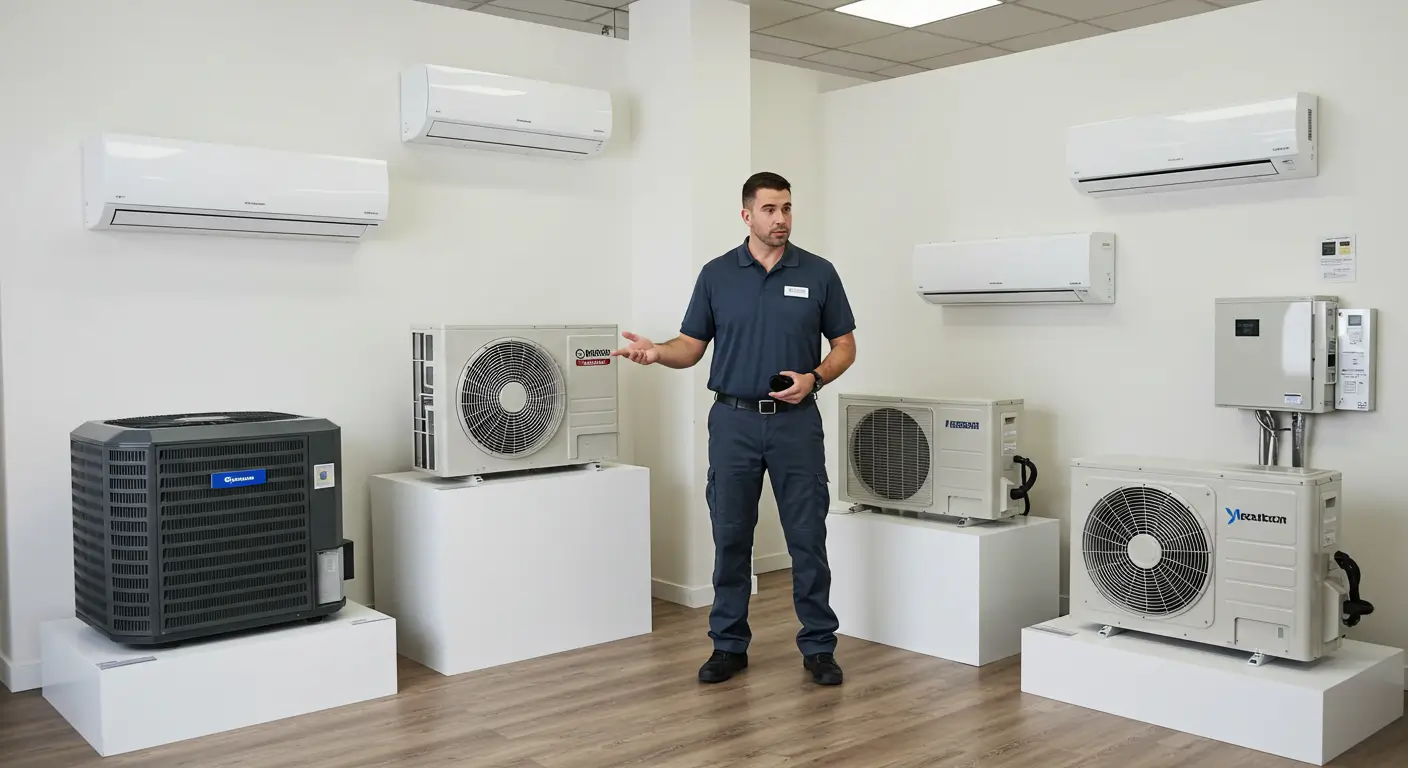
Ductless mini split systems consist of two main components connected by a small conduit: an outdoor condensing unit and one or more indoor air-handling units mounted on walls or ceilings. Unlike traditional central air systems that use extensive ductwork to distribute conditioned air throughout your home, these systems deliver cooling and heating directly into each room or zone where an indoor unit is installed.
The technology works through a refrigeration cycle similar to traditional air conditioners, but with some key differences that make them particularly well-suited for our climate. The outdoor unit contains the compressor, condenser coil, and expansion valve, while indoor units house the evaporator coil and fan. A small conduit containing the refrigerant lines, power cable, and condensate drain connects the two components through a simple 3-inch hole in your exterior wall.
Here’s what makes the technology special for New Orleans homes:
The refrigerant absorbs heat from inside your home and transfers it outside during cooling mode. In heating mode (yes, they heat too), the process reverses, extracting heat from outdoor air even on those occasional cold January mornings when temperatures drop into the 40s. Modern inverter technology allows the compressor to adjust its speed continuously rather than cycling on and off, providing precise temperature control while using significantly less energy.
Each indoor unit operates independently with its own remote control and thermostat settings. This means you can cool your bedroom to 72 degrees while keeping the rarely-used front parlor at 78 degrees, or completely turn off units in unoccupied areas – something impossible with traditional central air systems that treat your entire home as one zone.
The absence of ductwork eliminates the 20-30% energy loss that occurs in traditional systems, especially important in our climate where ducts often run through hot, humid attics or crawl spaces. This efficiency advantage becomes even more pronounced in historic homes where adding properly sealed and insulated ductwork would be extremely challenging.
Why Ductless Mini Splits Are Perfect for New Orleans Climate
Our Gulf South climate presents unique challenges that make ductless systems particularly effective. With humidity levels consistently ranging from 70-80% year-round and summer temperatures regularly reaching the low 90s, traditional HVAC systems often struggle to maintain both temperature and humidity control effectively.
Ductless systems excel in high-humidity environments like ours because they provide superior dehumidification through several mechanisms:
→ Precise temperature control means the system doesn’t overcool to remove humidity, a common problem with oversized traditional systems
→ Dry mode operation removes moisture without significant cooling, perfect for those spring and fall days when humidity is high but temperatures are moderate
→ Continuous operation at lower speeds provides steady dehumidification rather than the on-off cycling that reduces moisture removal
→ Direct delivery means conditioned air doesn’t pick up additional moisture traveling through ducts in humid attics
The extended cooling season that defines New Orleans living – typically nine months from March through November – makes energy efficiency crucial for managing utility costs. Ductless systems achieve SEER2 ratings between 15.2 and 35, significantly higher than older central air systems, and the elimination of duct losses can reduce cooling costs by 20-30%.
Hurricane season brings additional considerations that favor ductless installations. The outdoor units are designed to withstand high winds better than traditional central air condensers, and the smaller refrigerant lines are less vulnerable to storm damage than extensive ductwork. Individual zone control also means that if one indoor unit is damaged, the rest of your system continues operating – providing at least partial comfort during post-storm recovery when every degree matters.
Energy costs with current Entergy Louisiana rates make efficiency particularly important. At $0.13-$0.17 per kWh plus the $10 monthly customer charge, operating costs for a properly sized ductless system typically range from $30-$60 per month during peak summer operation, compared to $80-$150 for less efficient traditional systems in similar homes.
Historic Home Applications: Built for New Orleans Architecture
New Orleans’ historic housing stock presents unique challenges that make ductless systems not just convenient, but often the only practical solution for modern comfort. Let’s look at how these systems work with our most common historic architectural styles.
Shotgun Houses – those iconic 12-foot-wide, single-story homes with rooms arranged front to back – were designed for cross-ventilation, not central air. The narrow width means traditional ductwork would consume precious interior space, while the long, linear layout makes zone control particularly valuable. A typical shotgun house works perfectly with 2-3 indoor units: one in the front room, one in the main bedroom, and one in the kitchen area. The high ceilings provide ideal mounting space for wall units, and the original cross-ventilation helps distribute conditioned air naturally.
Creole Cottages with their distinctive front-facing gables and mixed-use ground floors often have unique room configurations that don’t translate well to traditional HVAC zoning. The raised foundation typical of these homes leaves little space for ductwork, while the thick masonry walls make running ducts particularly challenging. Ductless systems work beautifully here, with outdoor units easily accommodated in side yards and indoor units mounted to complement rather than compete with the architectural character.
Camelback Houses – shotgun houses with a second story added to the rear portion – present the classic challenge of cooling upstairs spaces that were never designed for mechanical air conditioning. Traditional central air often struggles to cool second floors effectively due to heat rise and ductwork limitations. A ductless approach allows precise control of the upstairs zone independently from the ground floor, eliminating the common complaint of upper floors being uncomfortably warm while downstairs areas are overcooled.
Double Gallery Houses and other raised Creole architecture benefit enormously from ductless systems’ flexibility. The raised foundation that protects against flooding also creates an awkward space for ductwork – too low for comfortable access but requiring careful moisture control. Ductless systems eliminate this challenge entirely while preserving the architectural integrity that makes these homes special.
Historic district regulations in the French Quarter and Garden District require special consideration for any exterior HVAC equipment. Ductless outdoor units are generally more acceptable to historic preservation authorities than traditional central air condensers because they’re smaller, quieter, and can often be positioned to minimize visual impact from the street. However, special permits are typically required, and professional installation ensures compliance with all preservation guidelines while maintaining system efficiency.
The installation process in historic homes requires expertise with older construction methods. Plaster walls, original millwork, and century-old electrical systems all need careful consideration. Experienced contractors understand how to route refrigerant lines through original framing without compromising structural integrity, and how to integrate modern comfort systems with historic character.
Cost Breakdown for New Orleans Installations
Understanding the investment required for ductless systems in New Orleans requires looking at both upfront costs and long-term savings, especially given our extended cooling season and current Entergy Louisiana rates.
Single-zone installations typically range from $3,000 to $6,000 installed, depending on the capacity needed and installation complexity. A basic 12,000 BTU unit suitable for a bedroom or small living area costs $2,000-$3,500 for equipment, plus $800-$1,500 for professional installation. Historic homes often fall toward the higher end of this range due to installation challenges like thick masonry walls or the need to carefully route lines around original architectural features.
Multi-zone systems offer better value for whole-home comfort, with 2-4 zone installations ranging from $6,500 to $15,000. A typical New Orleans shotgun house might use a 3-zone system: 9,000 BTU for the front room, 12,000 BTU for the main bedroom, and 9,000 BTU for the kitchen area, totaling around $8,000-$12,000 installed. Larger historic homes with multiple stories or extensive square footage can require 4-6 zones, pushing costs toward the higher end of the range.
Installation factors specific to New Orleans include:
→ Permits and inspections – $100 to $300 depending on system size and local requirements
→ Historic district considerations – Additional permitting and design review may add $200-$500
→ Electrical upgrades – Older homes may need electrical panel or circuit upgrades, adding $500-$2,000
→ Wall penetration complexity – Thick masonry walls common in historic construction may increase labor time
→ Accessibility challenges – Narrow lots and tight spaces can affect installation difficulty
Labor rates in New Orleans average $50-$150 per hour for licensed HVAC contractors, with total installation labor typically running $1,200-$2,500 for multi-zone systems. This reflects both the technical skill required for proper refrigerant handling and the extra care needed when working in historic properties.
The return on investment becomes clear when comparing operating costs. At current Entergy Louisiana rates of $0.13-$0.17 per kWh, a properly sized ductless system typically costs $30-$60 monthly to operate during peak summer months, compared to $80-$150 for traditional central air in similar homes. Over a typical 15-20 year system lifespan, the energy savings often justify the installation investment, especially when factoring in rebates and tax credits.
Available incentives help offset upfront costs. Entergy Louisiana offers rebates for high-efficiency ductless systems, typically $200-$500 per indoor unit depending on SEER2 rating. Federal tax credits for energy-efficient HVAC equipment can provide additional savings of up to $2,000 for qualifying installations. Louisiana state energy efficiency programs may offer additional incentives, making now an excellent time to invest in ductless technology.
Installation Process and Timeline
Understanding what to expect during ductless system installation helps ensure a smooth process, especially important when working in historic New Orleans homes where extra care and time are often required.
Pre-installation planning typically takes 1-2 weeks and involves several critical steps. Our experienced technicians conduct a detailed home assessment, measuring spaces, evaluating electrical systems, and identifying optimal locations for indoor and outdoor units. In historic homes, this planning phase also includes reviewing any historic district requirements and obtaining necessary permits.
Timeline for typical installations:
Single-zone systems: 4-8 hours for straightforward installations, potentially longer in historic homes requiring careful wall penetration or electrical upgrades. The process includes mounting the indoor unit, installing the outdoor condenser, running refrigerant lines through the wall, making electrical connections, and testing system operation.
Multi-zone systems: 1-2 days depending on the number of zones and installation complexity. Additional time accounts for running multiple refrigerant line sets, electrical connections for each indoor unit, and comprehensive system testing to ensure proper operation and refrigerant charge.
Historic homes may require additional time for several reasons: thicker masonry walls require more time and specialized tools for penetration, original electrical systems might need upgrades or careful integration, narrow lot lines and limited access can slow outdoor unit placement, and historic district permits may specify particular installation methods or aesthetic requirements.
The installation process begins with indoor unit mounting, typically on exterior walls to minimize refrigerant line length. Wall-mounted units install 7-8 feet above floor level for optimal air distribution, while ceiling cassette units require more extensive preparation but offer a more discrete appearance in rooms with decorative ceiling features.
Outdoor unit placement requires careful consideration in New Orleans. Units need adequate clearance for airflow and service access, protection from debris during hurricane season, minimal visual impact especially in historic districts, and proper drainage for condensate removal. Concrete pads provide stability and elevation above potential flooding, while sound considerations ensure neighbor-friendly operation.
Refrigerant line installation involves drilling a 3-inch hole through the exterior wall, routing copper lines and electrical connections, proper insulation to prevent condensation, and leak testing to ensure system integrity. In historic homes with thick masonry walls, this process requires specialized equipment and expertise to avoid damaging original construction.
The final phase includes electrical connections, system startup, and comprehensive testing. Our technicians verify proper refrigerant charge, test all operating modes including heating and cooling, program remote controls and any smart features, and provide operation and maintenance instruction to ensure optimal performance.
Post-installation support ensures long-term satisfaction. We provide detailed operating instructions specific to New Orleans climate, maintenance schedules appropriate for humid conditions, warranty information and service contacts, and guidance on optimal settings for energy efficiency during our extended cooling season.
Zone Control Benefits: Customized Comfort
One of the most significant advantages of ductless systems in New Orleans homes is the ability to create customized comfort zones that match how you actually live, rather than treating your entire home as a single temperature zone.
Traditional central air systems force you to cool or heat your entire home to satisfy the thermostat location, often resulting in some rooms being too warm while others are uncomfortably cool. In historic New Orleans homes with their unique layouts and varying room sizes, this one-size-fits-all approach becomes particularly problematic and expensive.
Ductless zone control allows you to:
→ Set different temperatures for different rooms based on use patterns and preferences
→ Turn off conditioning in unoccupied areas like guest rooms or formal dining rooms used only for special occasions
→ Accommodate different family member preferences without compromise
→ Adjust for room-specific challenges like sun exposure, high ceilings, or kitchen heat gain
Energy savings through zone control become substantial during our nine-month cooling season. Rather than cooling your entire 1,500 square foot shotgun house to 75 degrees, you might cool the bedroom to 72 degrees for sleeping comfort, the living area to 76 degrees for daytime activities, and set the rarely-used front room to 80 degrees. This targeted approach can reduce cooling costs by 25-40% compared to whole-house conditioning.
Room-specific control proves particularly valuable in New Orleans’ architectural styles:
Kitchens generate significant heat from cooking, especially during our already-warm months. A dedicated zone allows you to cool the kitchen more aggressively during meal preparation while maintaining comfortable but less costly temperatures in other areas.
Bedrooms benefit from individual control since sleep comfort preferences vary significantly among family members. Parents might prefer 70 degrees for sleeping, while teenagers are comfortable at 74 degrees, eliminating the nightly thermostat negotiations common with central air systems.
Second-story areas in camelback houses and other multi-level homes naturally run warmer due to heat rise. Independent upstairs zones can maintain comfort without overcooling ground-floor areas, solving the classic problem of upstairs rooms being stuffy while downstairs areas are frigid.
Home office spaces have become increasingly important, especially with more people working from home. A dedicated zone ensures comfortable working conditions during business hours without conditioning the entire home to office comfort levels.
The inverter technology in modern ductless systems makes zone control even more efficient. Rather than cycling completely on and off like traditional systems, inverter compressors adjust their speed continuously to maintain desired temperatures. This provides more precise control while using significantly less energy, particularly important given Entergy Louisiana’s current rate structure.
Smart control options available with many ductless systems allow even more sophisticated zone management. Programmable schedules can automatically adjust temperatures based on daily routines, smartphone apps enable remote control for arrival planning, and occupancy sensors can automatically adjust conditioning when rooms are empty. These features turn ductless systems into truly intelligent comfort solutions tailored to your lifestyle.
Energy Efficiency and Operating Cost Savings
The energy efficiency advantages of ductless mini splits become particularly pronounced in New Orleans’ climate and utility environment, where every improvement in efficiency translates directly to meaningful cost savings over our extended cooling season.
Modern ductless systems achieve SEER2 ratings between 15.2 and 35, with many units falling in the 20-25 range that qualifies for utility rebates and federal tax credits. To put this in perspective, older central air systems often operate at SEER ratings of 8-13, meaning new ductless installations can be twice as efficient as the systems they replace.
The elimination of ductwork losses provides immediate efficiency gains. Traditional ducted systems lose 20-30% of their conditioned air through leaks, poor insulation, and heat transfer in unconditioned spaces like attics and crawl spaces. In New Orleans, where ducts often run through extremely hot, humid attics, these losses can be even higher. Ductless systems deliver 100% of their conditioned air directly to living spaces, capturing efficiency improvements that are impossible with ducted systems.
Operating cost calculations with current Entergy Louisiana rates demonstrate substantial savings:
A typical 1,200 square foot shotgun house might use 900-1,200 kWh monthly for cooling with an older central air system during July and August. At $0.15 per kWh average rate including all charges, this represents $135-$180 monthly. A properly sized and operated ductless system in the same home typically uses 600-800 kWh monthly, reducing costs to $90-$120 – a savings of $45-$60 per month during peak season.
Annual savings multiply significantly over our long cooling season. While northern climates might run air conditioning 3-4 months annually, New Orleans homes typically require cooling from March through November – eight to nine months. The monthly savings multiply accordingly, with annual cooling cost reductions often ranging from $300-$600 for typical homes.
Inverter technology provides additional efficiency benefits particularly suited to our climate. Traditional air conditioners cycle completely on and off to maintain temperature, using maximum energy each time they start. Inverter systems adjust compressor speed continuously, using only the energy needed to maintain desired temperatures. This proves especially beneficial during spring and fall months when cooling loads vary throughout the day.
Zone control multiplies efficiency advantages by allowing you to condition only occupied spaces. A family spending most time in 2-3 rooms of a larger historic home can achieve cooling costs similar to a much smaller residence, effectively increasing their living space without proportionally increasing utility costs.
The efficiency advantages extend beyond just cooling costs. Heat pump operation during New Orleans’ mild winter months provides heating at a fraction of the cost of electric resistance heat or gas furnaces. According to the U.S. Department of Energy, ductless systems can reduce heating and cooling energy use by 30% compared to traditional HVAC systems. Even on January mornings when temperatures drop into the 40s, modern ductless heat pumps maintain efficiency ratings 2-3 times higher than traditional heating methods.
Federal and state incentives further improve the financial equation. Current federal tax credits can provide up to $2,000 for qualifying high-efficiency installations, while Entergy Louisiana rebates typically range from $200-$500 per indoor unit. These incentives, combined with the operating cost savings, often allow ductless systems to pay for themselves within 5-8 years through energy savings alone.
Maintenance Requirements for Gulf South Climate
New Orleans’ humid climate and extended cooling season create specific maintenance requirements that differ significantly from those in drier or milder climates. Proper maintenance becomes crucial not just for efficiency, but for preventing moisture-related problems that can affect both system performance and indoor air quality.
Monthly filter maintenance takes priority in our climate. The high humidity and dust levels common in New Orleans require more frequent filter attention than manufacturer recommendations developed for average conditions. Indoor unit filters should be cleaned monthly during heavy-use periods (March through November) and every 6-8 weeks during mild weather.
The filter cleaning process is straightforward but essential: remove filters according to unit instructions, rinse with lukewarm water to remove dust and debris, allow complete air drying before reinstallation, and replace filters that show signs of deterioration or permanent staining. Some homeowners prefer keeping spare filter sets to ensure uninterrupted operation while filters dry.
Condensate drainage requires particular attention in our humid environment where systems remove significant moisture from indoor air. Each indoor unit includes a condensate drain that must flow freely to prevent water buildup and potential damage. Monthly inspection ensures drains remain clear, while annual professional cleaning removes any algae or debris buildup that might cause blockages.
Outdoor unit maintenance addresses Gulf South environmental challenges:
Hurricane season preparation involves securing any loose components, clearing debris that might become projectiles, and ensuring adequate drainage around the unit pad. Post-storm inspection checks for debris damage, refrigerant line integrity, and proper electrical connections before restarting the system.
Salt air corrosion affects homes near Lake Pontchartrain or the Mississippi River. Quarterly rinsing of outdoor unit coils with fresh water helps prevent salt buildup that can reduce efficiency and cause premature component failure. This simple maintenance step significantly extends system life in coastal environments.
Professional maintenance twice annually ensures optimal performance and catches potential problems before they become costly repairs. Our New Orleans maintenance programs include comprehensive system inspection, refrigerant level verification, electrical connection tightening, and performance testing designed specifically for Gulf South operating conditions.
Spring maintenance (typically March or April) prepares systems for the demanding cooling season ahead. This includes cleaning outdoor coils, checking refrigerant pressures, testing all operating modes, calibrating thermostats and controls, and inspecting mounting hardware that might have loosened during winter storms.
Fall maintenance (October or November) focuses on heating system preparation and post-summer inspection. While heating demands are minimal in New Orleans, ensuring proper heat pump operation provides backup comfort during occasional cold snaps and helps maintain system efficiency.
Warning signs requiring immediate professional attention include:
→ Ice formation on indoor or outdoor units
→ Unusual sounds like grinding, squealing, or rattling
→ Reduced cooling capacity or inability to maintain set temperatures
→ Water leaking from indoor units
→ Electrical smells or visible damage to wiring
→ Remote control responsiveness problems
DIY maintenance tasks homeowners can safely perform include filter cleaning, keeping outdoor units clear of debris, checking for obvious leaks or damage, ensuring adequate clearance around units, and monitoring system performance for changes. However, all refrigerant-related service, electrical work, and internal component inspection should be left to licensed professionals.
Warranty compliance often requires documented professional maintenance, making annual service not just beneficial for performance but necessary for warranty protection. Our maintenance records ensure warranty coverage remains valid while providing documentation valuable for insurance purposes and home sales.
When Ductless Makes Sense vs Traditional HVAC
Choosing between ductless and traditional central air systems depends on your specific situation, home characteristics, and comfort priorities. Understanding when each option makes sense helps ensure you invest in the right solution for your New Orleans home.
Ductless systems prove ideal when:
Your home lacks existing ductwork and installing ducts would be invasive or prohibitively expensive. This includes most historic homes built before 1950, converted apartments or condos, and homes where ductwork was never properly designed for the layout.
Room-by-room comfort control is important to your family’s lifestyle or energy-saving goals. If different family members prefer different temperatures, or if you have spaces used infrequently, the zone control capabilities of ductless systems provide both comfort and cost advantages.
Energy efficiency is a top priority and you want to eliminate duct losses while achieving the highest possible SEER ratings. The combination of no ductwork, inverter technology, and precise control makes ductless systems the most efficient option available.
You’re dealing with additions or renovations where extending existing ductwork would be challenging or expensive. Room additions, converted garages, or enclosed porches often work perfectly with ductless solutions.
Noise levels matter for your comfort or neighborhood considerations. Ductless systems operate much more quietly than traditional central air, with indoor units producing sound levels similar to a quiet refrigerator.
Traditional central air makes more sense when:
Existing ductwork is in good condition and properly sized for your home’s current layout and efficiency goals. If you already have well-designed ducts, a high-efficiency central air system might provide better value.
Whole-home air filtration is important for allergy or air quality concerns. While ductless systems include filters, central air systems can accommodate more sophisticated whole-home filtration and air purification systems.
Budget constraints favor lower upfront costs and you’re willing to accept higher operating costs for lower initial investment. Traditional systems often have lower equipment and installation costs, though this advantage disappears over time through higher energy use.
Aesthetic preferences favor hidden systems and you don’t want any visible indoor equipment. While ductless units are designed to be unobtrusive, some homeowners prefer the completely hidden nature of central air systems.
Complex multi-zone ducted systems already exist and function well for your family’s needs. If your current system provides good comfort and efficiency, replacement might not be justified until equipment reaches end of life.
For New Orleans homes specifically, several factors tip the scales toward ductless:
Our extended cooling season makes energy efficiency particularly valuable, favoring the inherent advantages of ductless systems. The humidity control capabilities become crucial in our climate, where moisture management often matters more than pure temperature control. Historic home preservation concerns often make ductless the only practical option for adding modern comfort without compromising architectural integrity.
The decision often comes down to matching technology to your specific situation rather than choosing a universally “better” option. A consultation with experienced local contractors can help evaluate your home’s characteristics, your family’s comfort preferences, and your energy efficiency goals to determine which approach provides the best long-term value.
Many New Orleans homeowners find that ductless systems offer the perfect combination of comfort, efficiency, and respect for their home’s character – providing modern climate control without sacrificing the charm and architectural integrity that makes their house special.
Making the Right Choice for Your New Orleans Home
Ductless mini splits represent more than just another HVAC option – they’re often the ideal solution for New Orleans’ unique combination of challenging climate, historic architecture, and energy cost considerations. Whether you’re struggling with comfort in a shotgun house, planning a renovation that requires additional cooling capacity, or simply want better control over your Entergy Louisiana bills, ductless systems offer proven benefits that traditional central air often can’t match.
The technology has evolved significantly in recent years, with modern systems providing reliability, efficiency, and comfort that rivals or exceeds any other residential cooling option. In our Gulf South environment, where humidity control often matters more than pure temperature reduction, the superior dehumidification capabilities of ductless systems provide comfort improvements that go well beyond what SEER ratings might suggest.
The financial equation continues to favor ductless installations as utility rates increase and system efficiency improves. With current Entergy Louisiana rates and available rebates, many homeowners find that ductless systems pay for themselves through energy savings within 5-8 years, then continue providing cost advantages for the remainder of their 15-20 year lifespan.
Perhaps most importantly for New Orleans homeowners, ductless systems respect the character and integrity of our historic homes while providing thoroughly modern comfort. Rather than forcing 21st-century ductwork into 19th-century architecture, these systems work with your home’s original design to provide efficient, effective climate control that preserves what makes your house special.
If you’re considering ductless options for your New Orleans home, the time to explore your options is now. Current rebates and tax credits provide financial incentives that may not be available indefinitely, while the approaching summer cooling season makes system planning and installation timing increasingly important.
At Hagerman Services, we understand both the technical requirements of ductless systems and the unique challenges of New Orleans homes. Our team has the experience working in historic properties, knowledge of local permitting requirements, and commitment to installations that provide lasting comfort and efficiency. We’ll help you evaluate whether ductless technology fits your specific situation and, if so, design a system that maximizes both comfort and value for your investment.
Ready to explore how ductless mini splits can transform your home’s comfort while reducing your energy costs? Call us at (504) 314-1486 to schedule a consultation, or contact us online to learn more about ductless options for your New Orleans home. We’ll assess your specific needs, explain your options, and provide honest recommendations based on more than a decade of experience serving families throughout the Greater New Orleans area.
Don’t spend another summer struggling with inadequate cooling or excessive energy bills. Discover how ductless technology can provide the comfort, efficiency, and zone control that makes your house feel like the perfect home, regardless of what New Orleans weather brings your way.
Frequently Asked Questions
Q: How much do ductless mini splits cost to install in New Orleans?
A: Single-zone systems typically cost $3,000-$6,000 installed in New Orleans, while multi-zone systems range $6,500-$15,000+. Labor rates average $50-$150 per hour, with permits costing $100-$300. Historic homes may require additional time and permits, especially in the French Quarter or Garden District.
Q: Are ductless mini splits good for New Orleans humidity?
A: Yes, ductless systems excel in New Orleans’ 70-80% humidity environment. They provide superior dehumidification through dry mode operation, continuous low-speed running, and elimination of duct losses that can worsen humidity problems. This makes them particularly effective in our Gulf South climate.
Q: Can ductless mini splits work in historic New Orleans homes?
A: Absolutely. Ductless systems are ideal for shotgun houses, Creole cottages, and other historic homes without existing ductwork. The minimal installation requirements preserve architectural integrity while providing modern comfort. Special permits may be required in French Quarter and Garden District historic districts.
Q: How energy efficient are ductless mini splits?
A: Modern ductless systems achieve 15.2-35 SEER2 ratings and eliminate up to 30% energy loss from ductwork. Operating costs average $30-$60 monthly during peak summer with Entergy Louisiana rates of $0.13-$0.17 per kWh, compared to $80-$150 for traditional central air systems.
Q: What maintenance do ductless systems need in New Orleans climate?
A: Monthly filter cleaning is essential in New Orleans’ humid climate. Professional maintenance should include condensate drain cleaning, outdoor unit inspection, and refrigerant level checks. Hurricane season preparation and post-storm inspection are also important for Gulf South installations.
Q: Do ductless mini splits qualify for rebates in Louisiana?
A: Yes, Entergy Louisiana offers rebates for high-efficiency mini-split systems, typically $200-$500 per indoor unit. Federal tax credits can provide up to $2,000 for qualifying installations, and Louisiana state energy efficiency incentives may also apply for eligible systems.
Q: How long does ductless mini split installation take?
A: Most single-zone installations complete in 4-8 hours, while multi-zone systems may take 1-2 days. Historic homes may require additional time for permit approval, careful wall penetration through masonry, and integration with older electrical systems.